

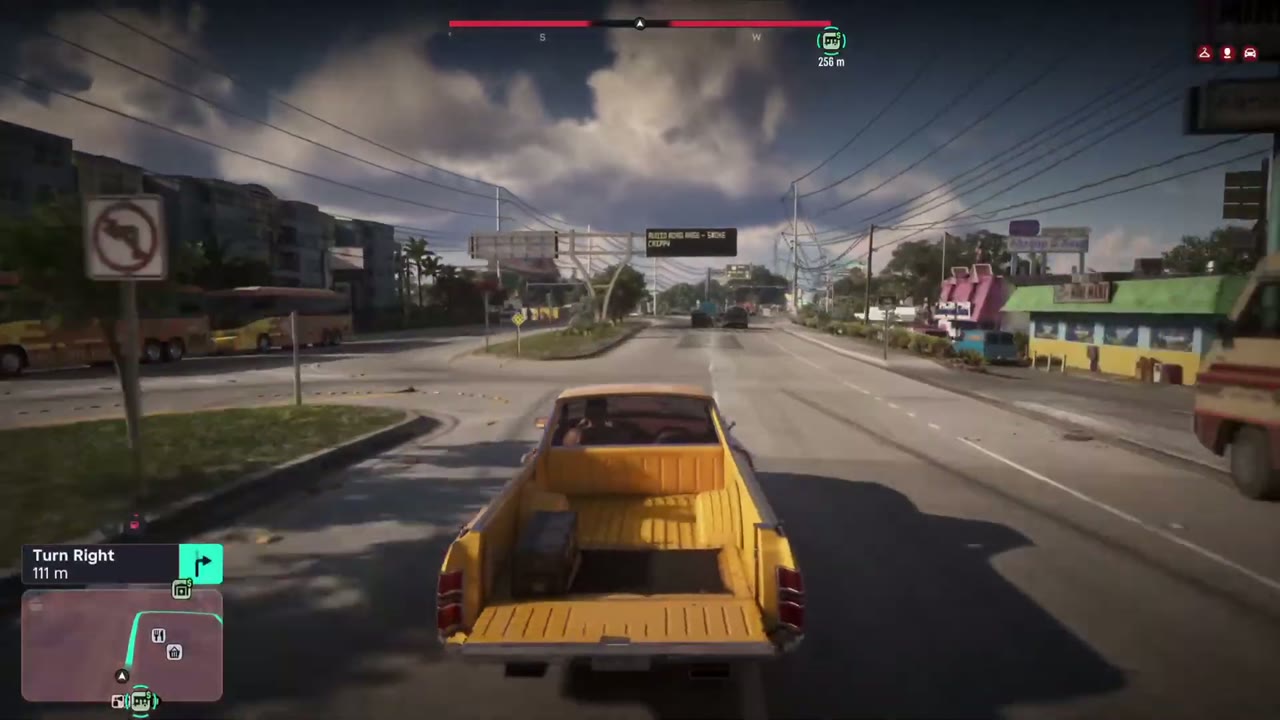
Short answer: GTA 6 hides five real money lessons in one two-hour session: know your real take-home number, plug small leaks, price things in work hours, check the risk next to every reward, and keep an emergency stash so pressure never picks your deal for you. Below, we break down each lesson with the exact numbers from our YouTube video.
The 5 GTA 6 money lessons at a glance
| Lesson | What happened in GTA 6 | Your move this week |
|---|---|---|
| 1. Pressure costs money | The player sold to the safer buyer for $320 less | Build a buffer so you never have to take the worse deal |
| 2. Small leaks add up | $40 vanished in about 80 minutes | Circle every charge you would not choose again |
| 3. Price things in hours | $320 = 12.8 hours at $25/hour | Turn your next purchase into work hours |
| 4. Risk sits next to reward | Bigger jobs came with higher security | Ask “what exactly can I lose?” before any high return |
| 5. Stash before danger | Players bank cash before risky missions | Start an emergency fund, even $50 a month |
Lesson 1: Pressure picks the worse deal
In the session we analyzed, the player had a stash worth selling and two buyers on the map. Donnie offered $1,600, while Brian offered $1,280. On paper, Donnie wins easily. However, Donnie’s trailer sat inside the police search zone, so the player took the safer deal for 20% less.
Honestly, that may have been the smart call in the game. Still, safety had a price: $320. In real life, the same pressure shows up as a rushed car repair, a last-minute flight or a loan signed because rent was due. When you have no cushion, the situation chooses the price for you.
Lesson 2: Know the number you can actually spend
When you get a job offer, you probably celebrate the salary. Yet the number that lands in your account is smaller after taxes, insurance and retirement contributions. Some of those deductions are good for you, and some are simply required. The point is to know each one by name.
Many people build their rent, car payment and lifestyle around the big number. As a result, the month runs out early. Instead, open your last pay stub and plan around your real take-home pay.
Lesson 3: The $40 leak nobody notices
Early in the session, the player’s cash read $1,902. About 80 minutes later, it read $1,862. Forty dollars disappeared, and nobody paused the game to ask where it went.
Real money leaks the same way. For example, a forgotten app, a delivery fee or a subscription that renewed overnight never feels like a decision. You can still buy whatever you want; just make each purchase a choice. Take 10 minutes, open your last bank statement and circle anything you don’t recognize or wouldn’t choose again today. If subscriptions are your weak spot, our guide on which AI subscriptions are worth it is a good place to start trimming.
Lesson 4: Price everything in work hours
Here’s a trick that makes every leak visible: stop pricing things in dollars and start pricing them in hours of your life. Suppose you take home $25 an hour (use your own number).
- The $40 leak = 1 hour and 36 minutes of work.
- The $320 gap between the two buyers = 12.8 hours, or more than one and a half 8-hour shifts.
Sometimes the answer is still yes. A concert with friends might be worth every minute. In contrast, a subscription you forgot about is not a decision; it’s just your Tuesday afternoon working for somebody else.
Lesson 5: Look for the risk rating your bank never shows
One GTA 6 screen does something your bank app never does: it puts the risk right next to the reward. In our session, a medium-security job paid $300 to $400, while a high-security job paid $1,900 to $2,400. The bigger number is tempting, but it only matters if you can survive going after it.
Nobody prints a security rating next to a real-life opportunity. So when someone promises a high return, ask the question the game answers for free: what’s the risk level, and what exactly can I lose? That same question protects you from online scams, too.
Why “winning it back” is harder than it looks
In GTA, a failed job means you reload and try again. In real life, that might have been your rent. Losses are also harder to recover than they feel:
- Lose 20% ($1,600 drops to $1,280), and you need a 25% gain just to get back to $1,600.
- Lose 50%, and you need a 100% gain to break even.
Therefore, chasing losses usually means taking even more risk at exactly the wrong moment.

The most important lesson: keep a stash somewhere safe
Guide creators report that in GTA 6 the cash in your pocket is lost if you get wasted or busted, which is why experienced players bank it before doing anything dangerous. Real life works the same way, only the “mission” is a surprise bill.
Imagine your car dies tomorrow and the repair costs $1,600. Without savings, it goes on a credit card. At the 22.15% average rate cited in our video (Federal Reserve data for cards that charge interest), here is how that one repair plays out:
| How you pay the $1,600 repair | Time to pay off | Interest paid |
|---|---|---|
| Minimum payments only (video example) | About 7 years | About $1,455 |
| Flat $100 a month on the card | 20 months | $313.88 |
| Save $100 a month first, then pay cash | 16 months of saving | $0 |
| Save $50 a month first, then pay cash | 32 months of saving | $0 |
In work hours at $25 an hour, the repair itself is 64 hours. Paid at the minimum, it grows to about 122 hours, or roughly 15 full shifts. An emergency fund isn’t exciting, and it won’t make you rich. Nevertheless, it keeps one bad day from turning into seven years of payments. For a step-by-step plan, read how to save $1,000 fast.
What $320 could grow into (and the fee you never see)
If that $320 had stayed invested for 30 years at a hypothetical 7% average yearly return, it would grow to about $2,597. That’s an example, not a promise, because real markets have great years and terrible years.
Fees work the same way in reverse. Invest $200 a month for 30 years ($72,000 of your own money), and at a hypothetical 7% it grows to about $243,994. Add a 1% yearly fee, and the result drops to about $200,903. In other words, a “tiny” 1% fee costs about $43,091. To find yours, look in your account documents for words like expense ratio, advisory fee or account fee, or ask your provider: “What does this account cost me each year?”
Four money moves for this week
- Open your last pay stub and write down the number that actually lands in your account. Plan around that one.
- Open your last statement and circle every charge you wouldn’t choose again.
- Start an emergency stash in an account separate from your spending money. Even $50 a month gets you moving.
- If you invest, find the yearly fee on every account you own and compare it with alternatives.
Want more GTA 6 money content? See our in-game guide to making money fast in GTA 6, then come back and apply the same discipline to your real wallet.
FAQ
What does GTA 6 teach about money?
GTA 6 shows risk next to reward, makes you choose between buyers under pressure and punishes you for carrying cash into danger. As a result, it’s a surprisingly clear lesson in emergency funds, hidden costs and risk.
How much does a $1,600 credit card balance cost at 22% interest?
Paying a flat $100 a month at 22.15% APR takes 20 months and about $314 in interest. Paying only the minimum can stretch it to around seven years and more than $1,400 in interest, depending on your card’s minimum payment formula.
How much should I keep in an emergency fund?
Start with a first goal you can reach, such as enough to cover one surprise bill like a car repair. After that, build toward several months of essential expenses at your own pace.
Is this financial advice?
No. This article and video are educational only, and any investment can lose money. We don’t recommend any specific fund, bank or product.




Leave a Reply